MimicSpanish
Practise daily, speak boldly
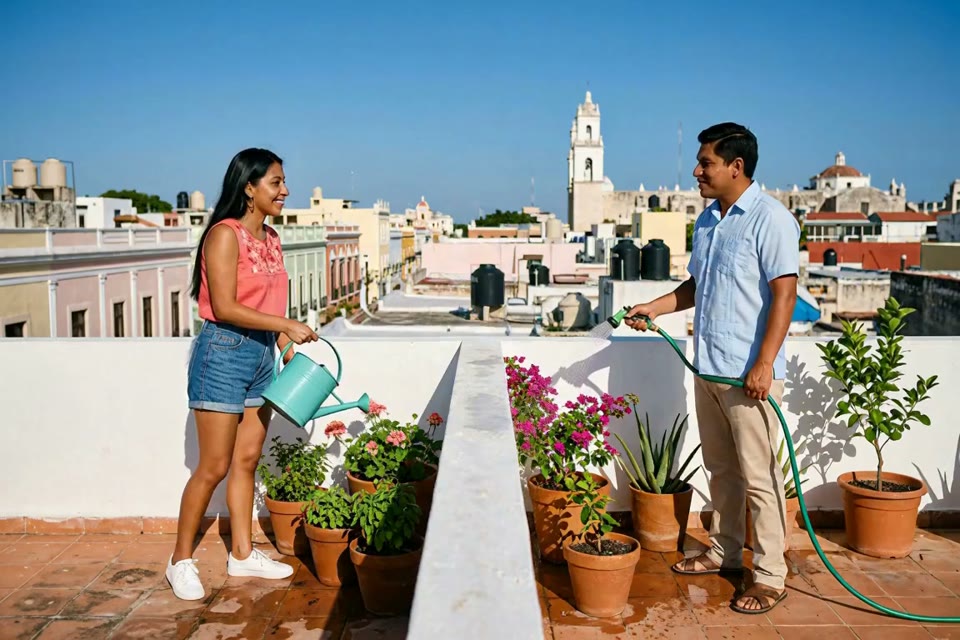 AI content
0:00
0:00
EN
¡Buenosdías,donCarlos,quécalorhacehoy!
Translating…
Turn on Record to capture your voice and get scored
SubtitlesLine 1/10
Vocabulary
calornoun
heat, hot weather
Ojalá lleguen pronto, porque el calor es muy fuerte.
plantasnoun (plural)
plants
Sí, con la lluvia las plantas están más verdes y bonitas.
necesitarverb
to need
Mis plantas necesitan mucha agua todos los días.
aguanoun
water
Muy bien, Lupita, que tenga buen día y tome mucha agua.
regarverb
to water (plants)
Yo las riego en la mañana y en la tarde.
lluvianoun
rain
¿Cuándo empiezan las lluvias aquí?
solnoun
sun
Me voy adentro porque el sol quema.
verdeadjective
green
Sí, con la lluvia las plantas están más verdes y bonitas.
Useful phrases
“hace mucho calor” — it is very hot (weather)
Buenos días, Lupita, sí, hace mucho calor en Mérida.
“todos los días” — every day
Mis plantas necesitan mucha agua todos los días.
“a veces” — sometimes
Normalmente empiezan en junio, pero a veces llegan tarde.
“que tenga buen día” — have a nice day (polite)
Muy bien, Lupita, que tenga buen día y tome mucha agua.
Grammar
Stem-changing verbs (e → ie)
Some verbs change e to ie when conjugated: empezar → empiezan, regar → riego.
Normalmente empiezan en junio, pero a veces llegan tarde.
Possessive pronoun: las mías
'Las mías' means 'mine' and replaces a feminine plural noun (las plantas).
Las mías también.
Auto-generated from the lesson — may not be perfect.