
Colors in Spanish: Names, Gender Rules and Everyday Expressions
The colors in Spanish, which ones change for masculine and feminine, how to say light and dark, Latin American variations (café, celeste, rosado), and fun color idioms.
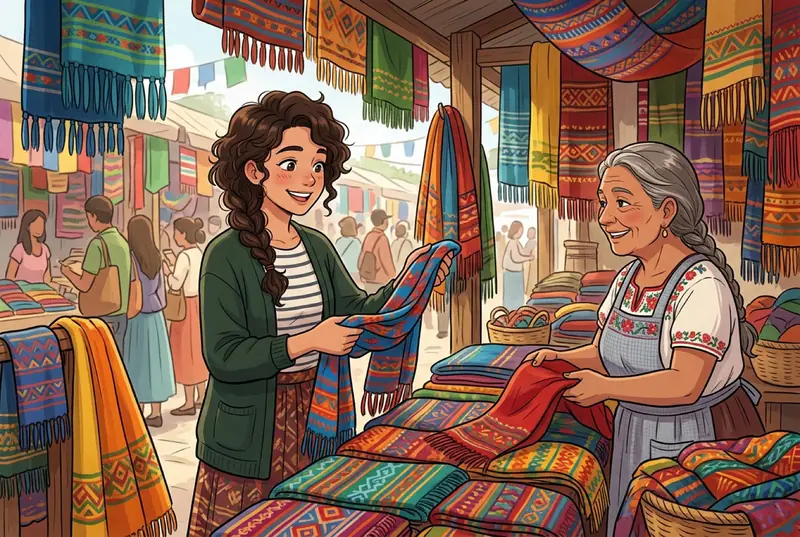
Colors are some of the first adjectives you'll use: describing clothes in a shop, a car, the sky, the food on your plate. The names are easy; the small trick is agreement — some colors change with masculine and feminine nouns, and others don't.
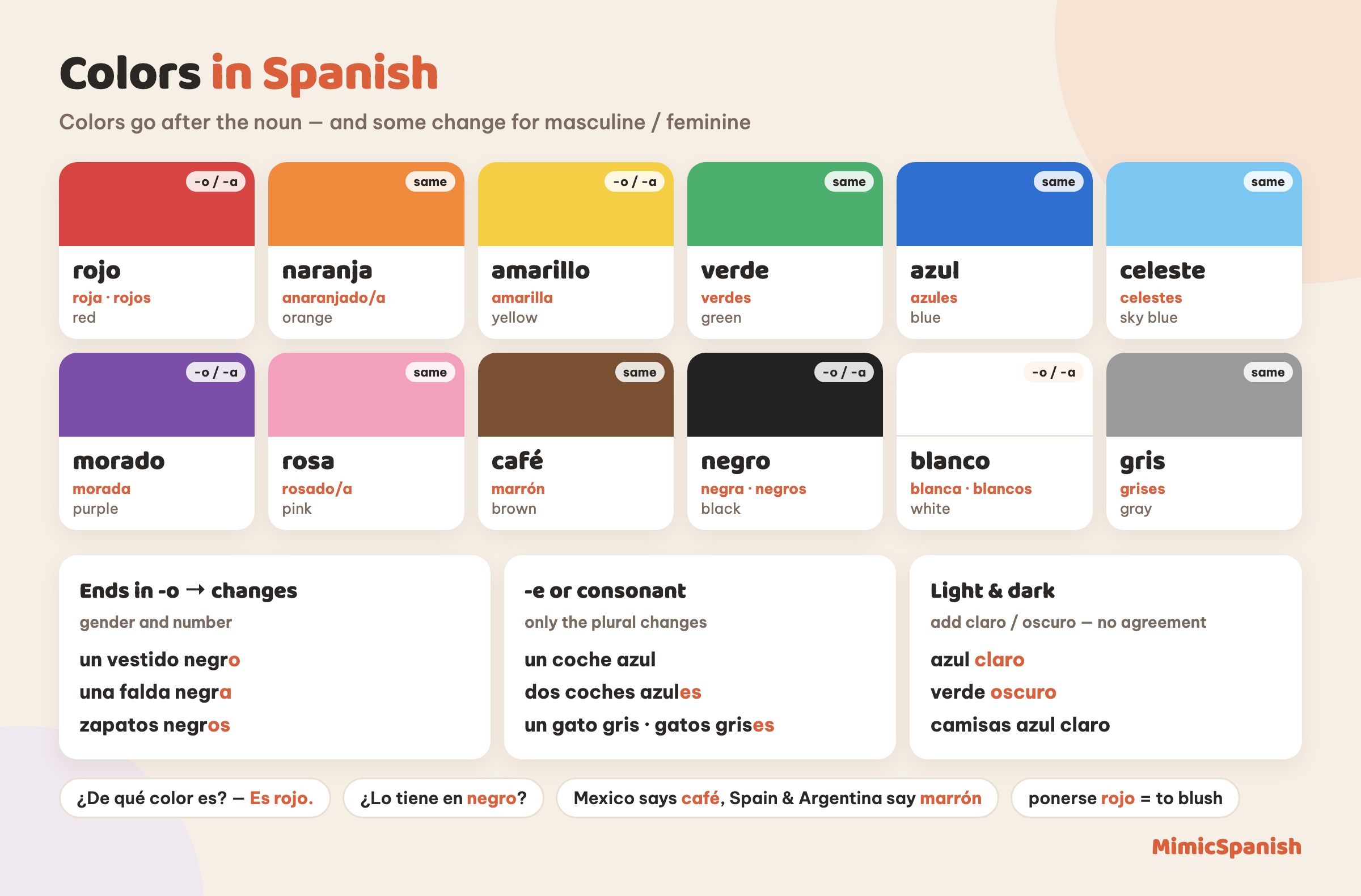
The basic colors
| English | Spanish |
|---|---|
| red | rojo / roja |
| orange | naranja (anaranjado/a) |
| yellow | amarillo / amarilla |
| green | verde |
| blue | azul |
| light blue | celeste |
| purple | morado / morada |
| pink | rosa (rosado/a) |
| brown | café, marrón |
| black | negro / negra |
| white | blanco / blanca |
| gray | gris |
Latin American notes: in Mexico and much of Central America, brown is usually café; marrón is common in Spain and the Southern Cone. Celeste (sky blue) is used everywhere and is the color of Argentina's flag. Rosado and anaranjado are common in Latin America alongside rosa and naranja.
Agreement: which colors change?
Colors are adjectives and usually go after the noun: un coche rojo, una camisa blanca.
- Colors ending in -o change for gender and number: un vestido negro, una falda negra, zapatos negros, botas negras.
- Colors ending in -e or a consonant change only for number: un árbol verde, hojas verdes; un coche azul, coches azules; un gato gris, gatos grises.
- Colors that are also nouns — naranja, rosa, café — often stay the same: camisas naranja, sillas café. You'll also hear camisas naranjas; both are used.
Light, dark and bright
Add claro (light), oscuro (dark) or fuerte / vivo (bright, strong):
- azul claro (light blue), verde oscuro (dark green), rojo fuerte
- With these combinations the color doesn't change: unas camisas azul claro.
Asking about colors
- ¿De qué color es? — What color is it?
- ¿De qué color son tus ojos? — What color are your eyes? — Son cafés / marrones / verdes.
- ¿Lo tiene en negro? — Do you have it in black? (very useful in shops)
- Me gusta el azul. — I like blue. (colors as nouns are masculine: el rojo, el verde)
Practise shop conversations with our shadowing lesson A different size, please.
Color expressions
- ponerse rojo — to blush, go red
- estar verde — to be unripe; also "to be a beginner" at something
- ver todo color de rosa — to see everything through rose-colored glasses
- el príncipe azul — Prince Charming
- quedarse en blanco — to go blank (forget everything)
- pasar la noche en blanco — to not sleep all night
Practice ideas
- Describe what you see for one minute a day: Mi mochila es negra. El cielo está gris.
- Shadow real dialogues where people describe clothes and things — our Shopping & money vocabulary and shadowing topics help here.
- Watch the agreement: say una casa blanca and unas casas blancas out loud until the endings feel automatic.
Frequently asked questions
Do colors go before or after the noun in Spanish?
After, in normal speech: un coche rojo. Putting a color before the noun is poetic: la blanca nieve.
Is it "marrón" or "café"?
Both mean brown. Café is more common in Mexico and Central America; marrón in Spain, Argentina and Uruguay.
Are colors masculine or feminine in Spanish?
As nouns, colors are masculine: el rojo, el azul. As adjectives, they agree with the noun they describe.