How to say “congratulations” in Spanish
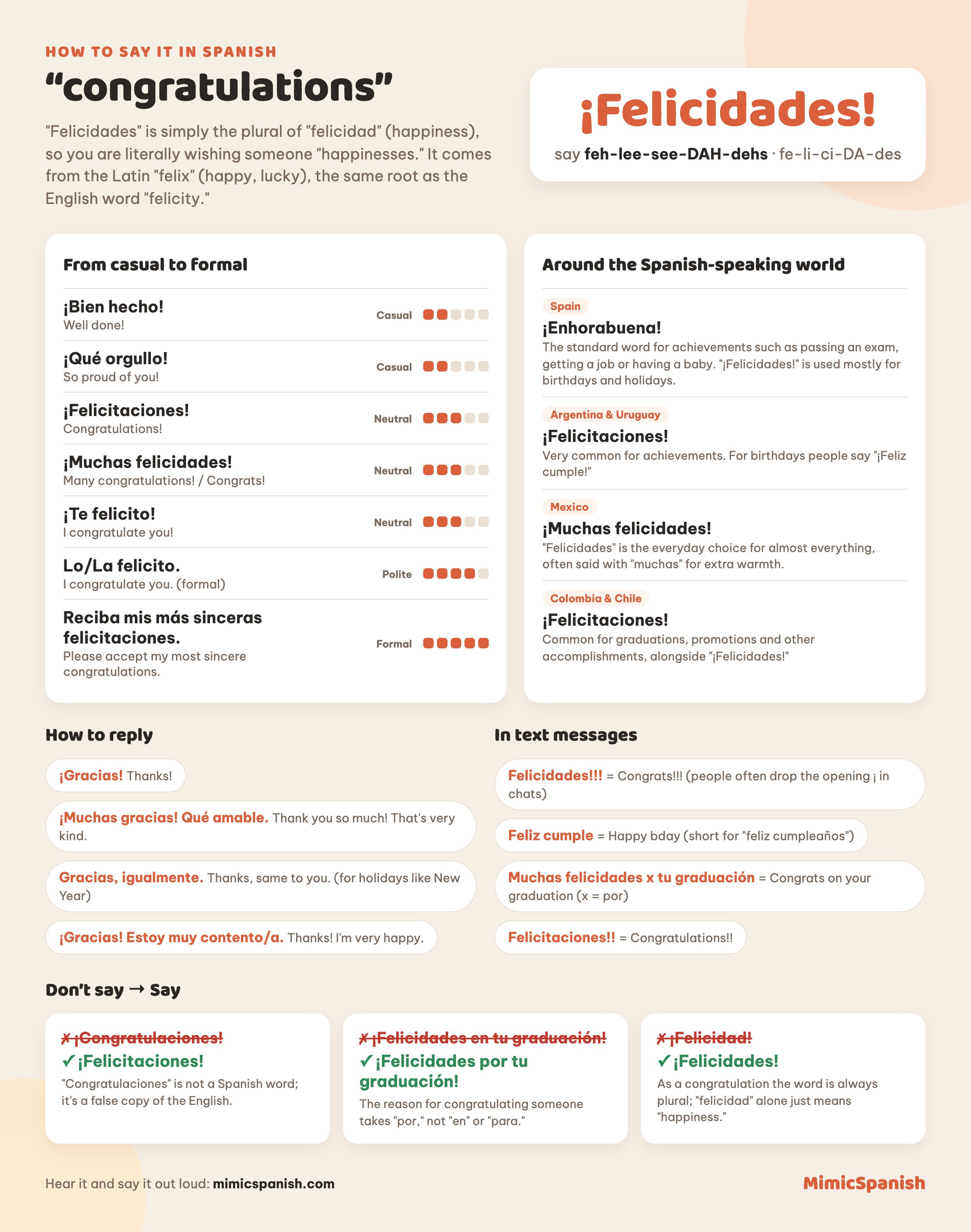
The most common way to say "congratulations" in Spanish is "¡Felicidades!" It works for birthdays, weddings, new jobs, graduations and almost any good news. In Latin America you'll also hear "¡Felicitaciones!" for achievements, while in Spain people usually say "¡Enhorabuena!" for accomplishments.
How to pronounce “¡Felicidades!”
- In Latin America the 'c' in 'ci' sounds like an English 's', while in most of Spain it sounds like the 'th' in 'think'.
- The 'd' in '-dades' is soft, almost like the 'th' in 'this', so don't make it a hard English 'd'.
- Keep every 'e' short and pure like the 'e' in 'pet', and never turn it into 'ay'.
What it literally means
"Felicidades" is simply the plural of "felicidad" (happiness), so you are literally wishing someone "happinesses." It comes from the Latin "felix" (happy, lucky), the same root as the English word "felicity."
Other ways to say it, from casual to formal
- ¡Bien hecho!Well done! · praising a task or effortCasual
- ¡Qué orgullo!So proud of you! · family or close friends celebrating a big achievementCasual
- ¡Felicitaciones!Congratulations! · achievements like a new job, a degree or a prize (very common in Latin America)Neutral
- ¡Muchas felicidades!Many congratulations! / Congrats! · warm, heartfelt congratulations for friends and familyNeutral
- ¡Enhorabuena!Congratulations! / Well done! · achievements and good news, mainly in SpainNeutral
- ¡Te felicito!I congratulate you! · personally congratulating a friend on something they didNeutral
- Lo/La felicito.I congratulate you. (formal) · a boss, client or older person, using ustedPolite
- Reciba mis más sinceras felicitaciones.Please accept my most sincere congratulations. · formal letters, emails or speechesFormal
By country
- ¡Enhorabuena!Spain · The standard word for achievements such as passing an exam, getting a job or having a baby. "¡Felicidades!" is used mostly for birthdays and holidays.
- ¡Felicitaciones!Argentina & Uruguay · Very common for achievements. For birthdays people say "¡Feliz cumple!"
- ¡Muchas felicidades!Mexico · "Felicidades" is the everyday choice for almost everything, often said with "muchas" for extra warmth.
- ¡Felicitaciones!Colombia & Chile · Common for graduations, promotions and other accomplishments, alongside "¡Felicidades!"
In text messages
Example sentences
- ¡Felicidades por tu nuevo trabajo!Congratulations on your new job!
- ¡Muchas felicidades en tu día!Happy birthday! (literally: Many congratulations on your day!)
- ¡Felicidades a los dos! Hacen una pareja muy bonita.Congratulations to you both! You make a lovely couple.
- Me dijeron que vas a ser mamá. ¡Felicidades!They told me you're going to be a mom. Congratulations!
- Te felicito por terminar la carrera. Sé que no fue fácil.Congratulations on finishing your degree. I know it wasn't easy.
- Quería felicitarlos por el excelente trabajo que hicieron este año.I wanted to congratulate you all on the excellent work you did this year.
Mini dialogue: Good news at the office
How to reply
- ¡Gracias!Thanks!
- ¡Muchas gracias! Qué amable.Thank you so much! That's very kind.
- Gracias, igualmente.Thanks, same to you. (for holidays like New Year)
- ¡Gracias! Estoy muy contento/a.Thanks! I'm very happy.
Grammar: Use "por" to say what you're congratulating someone on
In English you say "congratulations ON something," but in Spanish you use "por": "felicidades por" + noun or infinitive. The verb is "felicitar a alguien por algo" (to congratulate someone on something). Don't use "en" or "para" here.
- ¡Felicidades por tu boda!Congratulations on your wedding!
- Te felicito por aprobar el examen.Congratulations on passing the exam.
Common mistakes
Culture tip
Latin Americans say "¡Felicidades!" often and warmly. It usually comes with a hug, a pat on the back or, among friends and family, a kiss on the cheek. It's the go-to phrase for birthdays, and in Mexico people may follow it by singing "Las mañanitas." You'll also hear it for holidays, weddings, babies and any good news, so saying it generously is always well received.