How to say “no problem” in Spanish
The most common way to say "no problem" in Spanish is "No hay problema" (literally "there's no problem"). For a shorter, very natural option, say "Sin problema". To reassure someone after an apology, Spanish speakers often say "No te preocupes" ("don't worry").
How to pronounce “No hay problema”
- "Hay" sounds exactly like the English word "eye" because the h is always silent in Spanish.
- The r in "pro" is a quick single tap of the tongue, like the tt in American "butter", not an English r.
- Keep every vowel short and pure: "ble" is "bleh" (not "blay") and the final "ma" is a clear "mah", not "muh".
What it literally means
"No hay problema" literally means "there is no problem". "Hay" is the special form of the verb haber that means "there is / there are". "Problema" comes from Greek through Latin, which is why it ends in -a but is masculine (el problema).
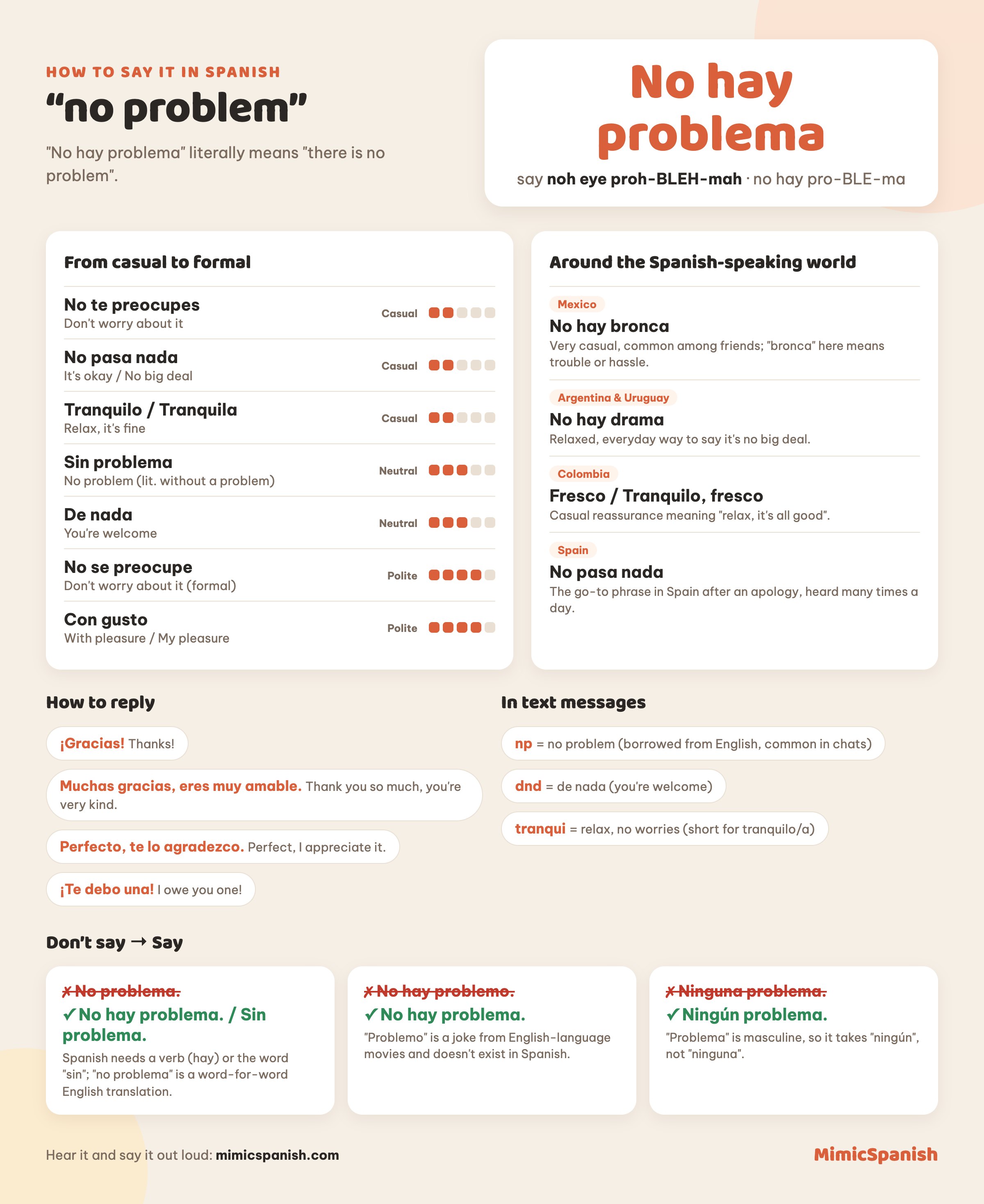
Other ways to say it, from casual to formal
- No te preocupesDon't worry about it · replying to an apology from a friendCasual
- No pasa nadaIt's okay / No big deal · after a small mistake or apology (very common in Spain)Casual
- Tranquilo / TranquilaRelax, it's fine · calming someone who apologizes too muchCasual
- Sin problemaNo problem (lit. without a problem) · agreeing quickly to a requestNeutral
- Ningún problemaNo problem at all · emphatic agreement, polite and friendlyNeutral
- De nadaYou're welcome · replying to "gracias"Neutral
- No se preocupeDon't worry about it (formal) · replying to an apology from a customer, elder or bossPolite
- Con gustoWith pleasure / My pleasure · replying to thanks, especially in service situationsPolite
By country
- No hay broncaMexico · Very casual, common among friends; "bronca" here means trouble or hassle.
- No hay dramaArgentina & Uruguay · Relaxed, everyday way to say it's no big deal.
- Fresco / Tranquilo, frescoColombia · Casual reassurance meaning "relax, it's all good".
- No pasa nadaSpain · The go-to phrase in Spain after an apology, heard many times a day.
- Pura vidaCosta Rica · The national all-purpose phrase; can mean "no problem", "all good" or "thanks".
In text messages
Example sentences
- —¿Me pasas la sal? —Sí, no hay problema.—Can you pass me the salt? —Sure, no problem.
- Sin problema, te llamo mañana.No problem, I'll call you tomorrow.
- —Perdón por llegar tarde. —No te preocupes.—Sorry for being late. —Don't worry about it.
- Si quieres, te ayudo con la mudanza. Ningún problema.If you want, I'll help you with the move. No problem at all.
- No hay problema si pagas con tarjeta.It's no problem if you pay by card.
- Señora, no se preocupe, podemos cambiar la reserva para el viernes.Ma'am, don't worry, we can change the reservation to Friday.
Mini dialogue: Asking a coworker for a favor
How to reply
- ¡Gracias!Thanks!
- Muchas gracias, eres muy amable.Thank you so much, you're very kind.
- Perfecto, te lo agradezco.Perfect, I appreciate it.
- ¡Te debo una!I owe you one!
Grammar: "Problema" is masculine
Even though it ends in -a, "problema" is a masculine noun, so it takes "el", "un" and "ningún". Many words from Greek ending in -ma work the same way (el tema, el sistema, el idioma). Adjectives that describe it must also be masculine.
- No es ningún problema.It's no problem at all.
- Tenemos un problema pequeño.We have a small problem.
Common mistakes
Culture tip
Native speakers say "no hay problema" and "sin problema" all the time to agree to small requests, often with a smile or a quick nod. When someone apologizes, "no te preocupes" or "tranquilo" sounds warmer than "no hay problema". In shops and restaurants in much of Latin America, staff often say "con gusto" instead of "de nada" when you thank them.