How to say “happy new year” in Spanish
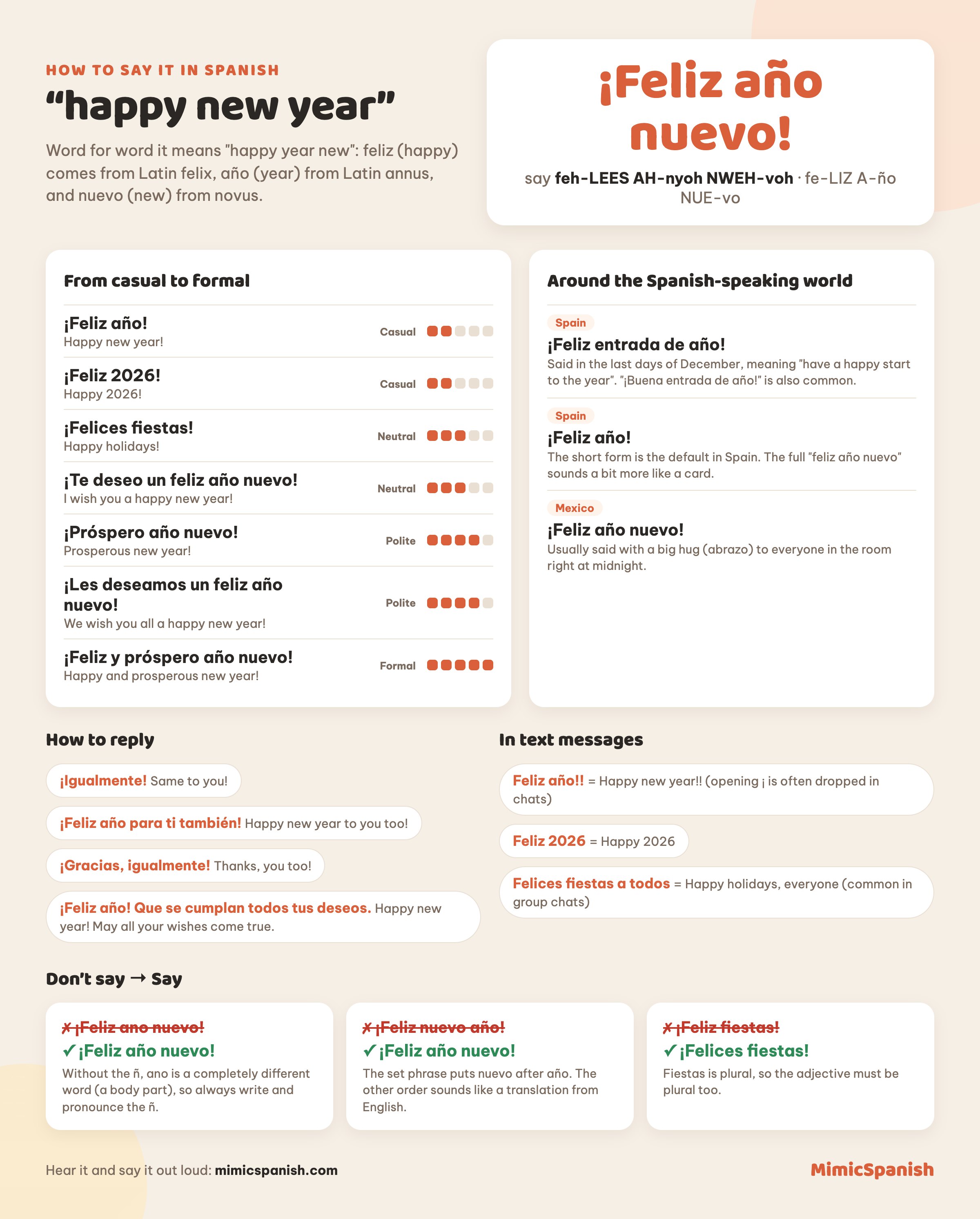
"Happy new year" in Spanish is "¡Feliz año nuevo!" (feh-LEES AH-nyoh NWEH-voh). In everyday speech many people shorten it to "¡Feliz año!", and you'll hear both all over Latin America and Spain, from the midnight countdown on December 31st until about mid-January.
How to pronounce “¡Feliz año nuevo!”
- The ñ in año sounds like the 'ny' in 'canyon', so say AH-nyoh, never AH-noh.
- Nuevo is two syllables, not three: blend the 'ue' into one quick 'weh' sound (NWEH-voh).
- In Latin America the z in feliz sounds like an English 's', while in most of Spain it sounds like the 'th' in 'think' (feh-LEETH).
What it literally means
Word for word it means "happy year new": feliz (happy) comes from Latin felix, año (year) from Latin annus, and nuevo (new) from novus. As usual in Spanish, the describing word nuevo comes after the noun, while feliz goes before it, as it does in many set greetings like "feliz cumpleaños".
Other ways to say it, from casual to formal
- ¡Feliz año!Happy new year! · Most common in casual speech, especially in personCasual
- ¡Feliz 2026!Happy 2026! · Casual messages and social media postsCasual
- ¡Felices fiestas!Happy holidays! · Late December, covering all the holidaysNeutral
- ¡Te deseo un feliz año nuevo!I wish you a happy new year! · Personal messages to one personNeutral
- ¡Que tengas un excelente año!Have an excellent year! · Warm wish to a friend or coworkerNeutral
- ¡Próspero año nuevo!Prosperous new year! · Cards, signs and formal greetingsPolite
- ¡Les deseamos un feliz año nuevo!We wish you all a happy new year! · From a company, family or group to many peoplePolite
- ¡Feliz y próspero año nuevo!Happy and prosperous new year! · Business emails and holiday cardsFormal
By country
- ¡Feliz entrada de año!Spain · Said in the last days of December, meaning "have a happy start to the year". "¡Buena entrada de año!" is also common.
- ¡Feliz año!Spain · The short form is the default in Spain. The full "feliz año nuevo" sounds a bit more like a card.
- ¡Feliz año nuevo!Mexico · Usually said with a big hug (abrazo) to everyone in the room right at midnight.
In text messages
Example sentences
- ¡Feliz año nuevo, mamá!Happy new year, Mom!
- ¡Feliz año! ¿Qué tal tus vacaciones?Happy new year! How was your vacation?
- Te llamo a medianoche para decirte feliz año.I'll call you at midnight to say happy new year.
- Mis abuelos nos mandaron una tarjeta que dice "Próspero año nuevo".My grandparents sent us a card that says "Prosperous new year."
- Todavía no te había dicho: ¡feliz año!I hadn't told you yet: happy new year!
- Les deseamos a todos nuestros clientes un feliz y próspero año nuevo.We wish all our customers a happy and prosperous new year.
Mini dialogue: First day back at work in January
How to reply
- ¡Igualmente!Same to you!
- ¡Feliz año para ti también!Happy new year to you too!
- ¡Gracias, igualmente!Thanks, you too!
- ¡Feliz año! Que se cumplan todos tus deseos.Happy new year! May all your wishes come true.
Grammar: Feliz changes to felices in the plural
Feliz is an adjective, so it must match the noun it describes in number. With a singular noun like año you say feliz, but with a plural noun like fiestas you need felices (z changes to c before -es). Feliz doesn't change for masculine or feminine.
- ¡Feliz año nuevo!Happy new year! (singular)
- ¡Felices fiestas!Happy holidays! (plural)
Common mistakes
Culture tip
At midnight on December 31st, people count down the last seconds, then hug and kiss everyone on the cheek while saying "¡Feliz año!". In many countries people also eat twelve grapes, one for each stroke of the clock. It's normal to keep saying "¡Feliz año!" the first time you see someone in January, even weeks later, and the usual reply is simply "¡Igualmente!".