How to say “good afternoon” in Spanish
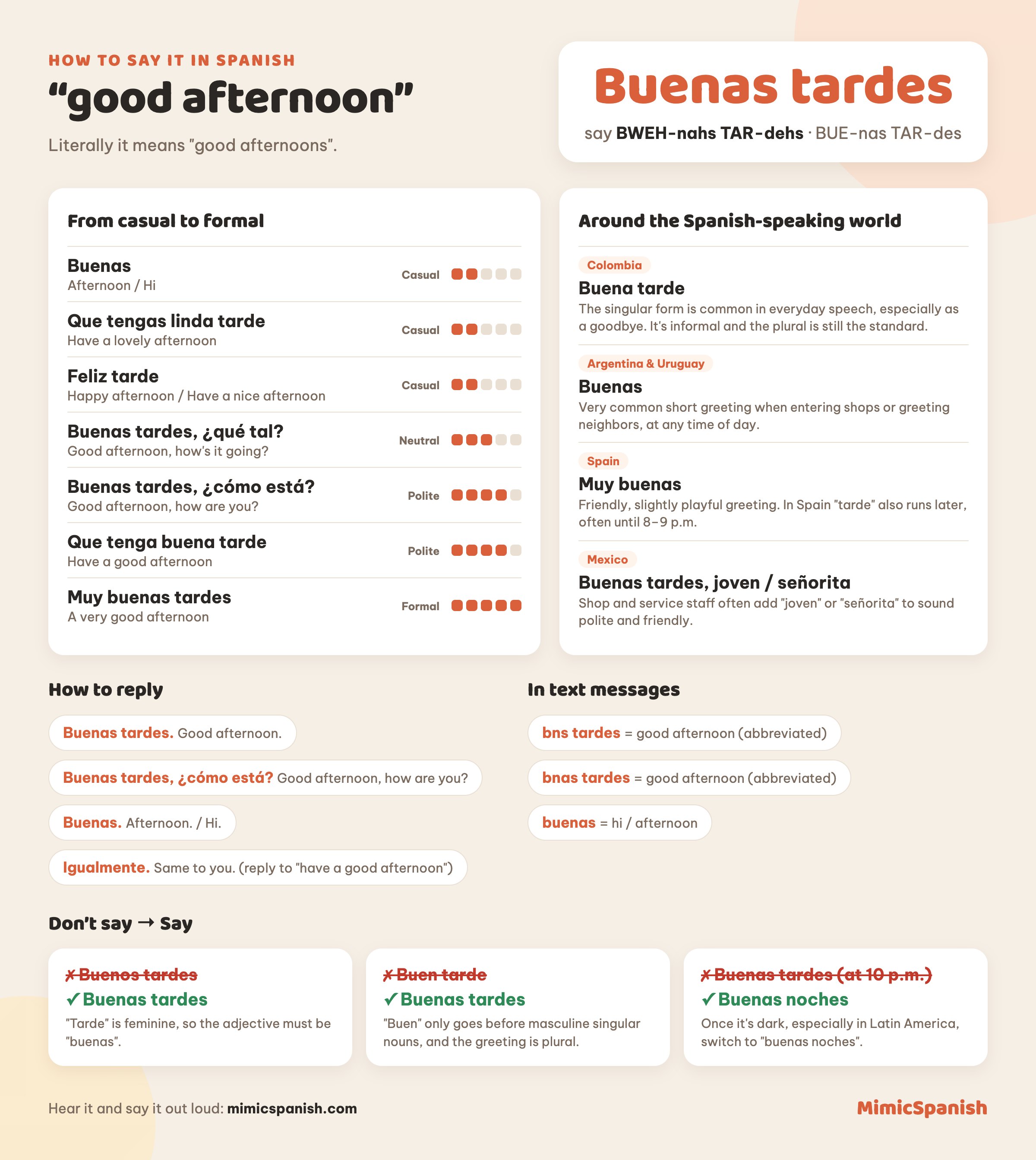
"Good afternoon" in Spanish is "buenas tardes" (BWEH-nahs TAR-dehs). It's the standard, polite greeting from about noon or after lunch until it gets dark. In casual situations many people shorten it to just "buenas".
How to pronounce “Buenas tardes”
- Say "bue" as one quick syllable, "bweh", not two separate sounds like "boo-eh".
- The r in "tardes" is a single quick tap of the tongue, like the "tt" in American "butter", not an English r.
- The d in "tardes" is soft, with the tongue lightly touching the back of the upper teeth, close to the "th" in "this".
What it literally means
Literally it means "good afternoons". "Tarde" (afternoon/evening) comes from the Latin adverb "tarde" meaning "late", and the greeting uses the plural form by convention, just like "buenos días" and "buenas noches".
Other ways to say it, from casual to formal
- BuenasAfternoon / Hi · casual greeting at any time of dayCasual
- Que tengas linda tardeHave a lovely afternoon · warm goodbye to a friend, common in Latin AmericaCasual
- Feliz tardeHappy afternoon / Have a nice afternoon · friendly message or goodbye, especially in textsCasual
- Buenas tardes, ¿qué tal?Good afternoon, how's it going? · friendly greeting with neighbors or coworkersNeutral
- Buenas tardes a todosGood afternoon, everyone · greeting a group, class or meetingPolite
- Buenas tardes, ¿cómo está?Good afternoon, how are you? · polite greeting to a stranger or older personPolite
- Que tenga buena tardeHave a good afternoon · saying goodbye politely in the afternoonPolite
- Muy buenas tardesA very good afternoon · extra-polite greeting, customer service, presentationsFormal
By country
- Buena tardeColombia · The singular form is common in everyday speech, especially as a goodbye. It's informal and the plural is still the standard.
- BuenasArgentina & Uruguay · Very common short greeting when entering shops or greeting neighbors, at any time of day.
- Muy buenasSpain · Friendly, slightly playful greeting. In Spain "tarde" also runs later, often until 8–9 p.m.
- Buenas tardes, joven / señoritaMexico · Shop and service staff often add "joven" or "señorita" to sound polite and friendly.
In text messages
Example sentences
- Buenas tardes, ¿tiene pan integral?Good afternoon, do you have whole wheat bread?
- Buenas tardes, señora. ¿Cómo está?Good afternoon, ma'am. How are you?
- Buenas tardes a todos. Empezamos la clase.Good afternoon, everyone. Let's start the class.
- Buenas tardes, quisiera hacer una reservación para dos.Good afternoon, I'd like to make a reservation for two.
- Gracias por su ayuda. ¡Que tenga buena tarde!Thank you for your help. Have a good afternoon!
- Cuando llegué a la oficina, todos me dijeron "buenas tardes" aunque ya eran casi las siete.When I got to the office, everyone said "good afternoon" to me even though it was almost seven.
Mini dialogue: At the pharmacy
How to reply
- Buenas tardes.Good afternoon.
- Buenas tardes, ¿cómo está?Good afternoon, how are you?
- Buenas.Afternoon. / Hi.
- Igualmente.Same to you. (reply to "have a good afternoon")
Grammar: Adjective agreement: buenas (feminine plural)
"Tarde" is a feminine noun, so the adjective must be feminine too: "buenas", not "buenos". The greeting is always plural ("buenas tardes"), while "buenos días" is masculine because "día" is masculine. When you talk about one afternoon, use the singular: "una buena tarde".
- Buenas tardes, profesora.Good afternoon, professor.
- Fue una tarde muy buena.It was a really nice afternoon.
Common mistakes
Culture tip
People say "buenas tardes" constantly: when entering a shop, a waiting room, an elevator or a bus, it's normal to greet everyone present. In Latin America it's used from about noon until dark (around 6–7 p.m.), while in Spain "buenos días" lasts until lunch (around 2 p.m.) and "buenas tardes" can stretch until 8 or 9 p.m. Skipping the greeting before asking a question can come across as rude, so start with "buenas tardes" first.