How to say “see you tomorrow” in Spanish
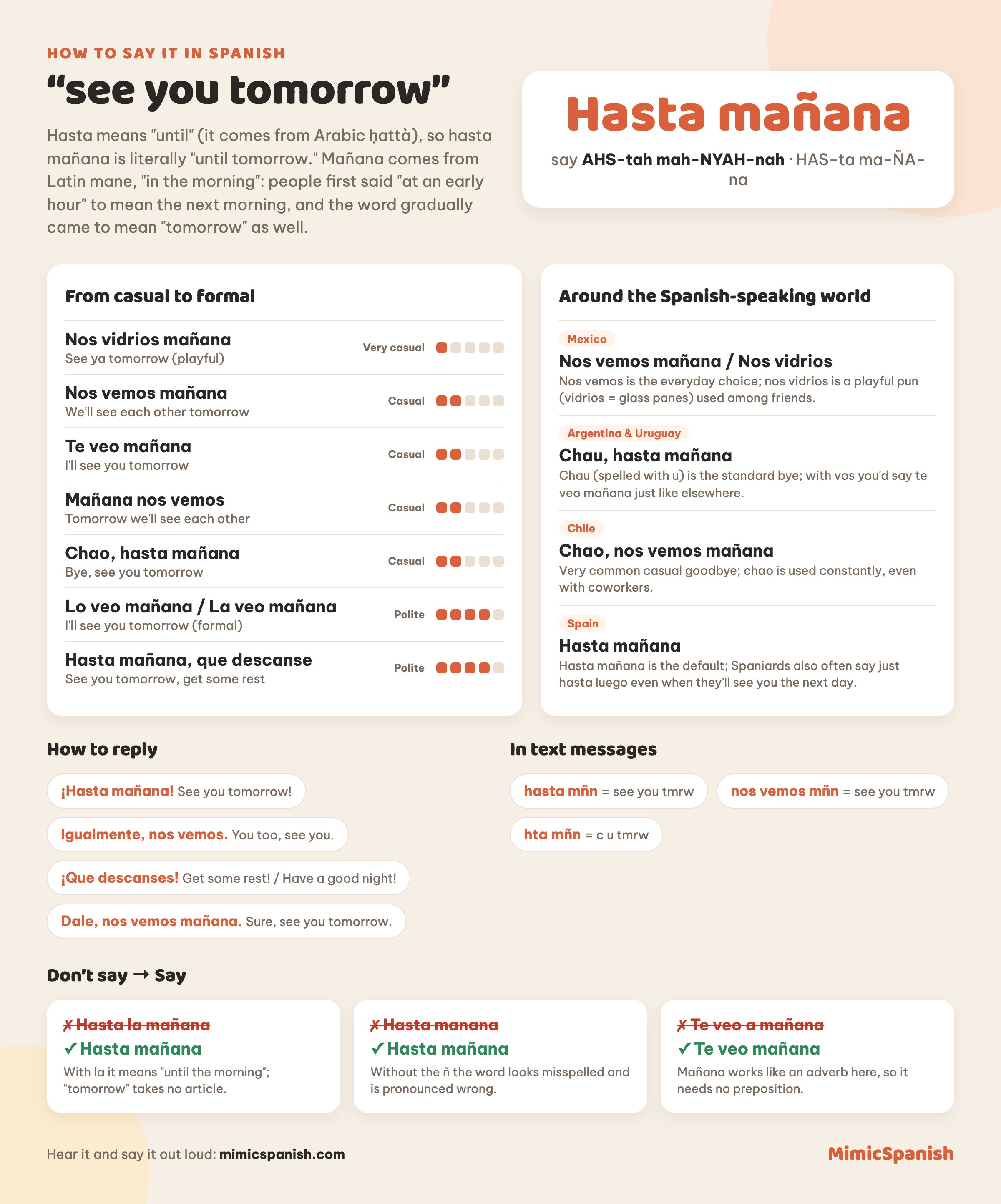
"Hasta mañana" is the most common, neutral way to say "see you tomorrow" in Spanish, and it works with friends, coworkers and strangers alike. In Latin America you'll also hear "nos vemos mañana" (literally "we see each other tomorrow"), which sounds a little more relaxed and friendly. Both are used everywhere in the Spanish-speaking world, including Spain.
How to pronounce “Hasta mañana”
- The h in hasta is silent, so the word starts with a clear 'ah' sound: AHS-tah.
- The ñ sounds like the 'ny' in 'canyon', so mañana is mah-NYAH-nah, never 'mah-NAH-nah'.
- Every a is a short, open 'ah' as in 'father'; don't turn the final a into a lazy 'uh'.
What it literally means
Hasta means "until" (it comes from Arabic ḥattà), so hasta mañana is literally "until tomorrow." Mañana comes from Latin mane, "in the morning": people first said "at an early hour" to mean the next morning, and the word gradually came to mean "tomorrow" as well.
Other ways to say it, from casual to formal
- Nos vidrios mañanaSee ya tomorrow (playful) · joking slang among friends, mainly MexicoVery casual
- Nos vemos mañanaWe'll see each other tomorrow · with friends, classmates, coworkers; very common in Latin AmericaCasual
- Te veo mañanaI'll see you tomorrow · to one friend or family member you speak to as túCasual
- Mañana nos vemosTomorrow we'll see each other · casual goodbye, putting emphasis on 'tomorrow'Casual
- Chao, hasta mañanaBye, see you tomorrow · quick, friendly goodbye when leaving work or classCasual
- Lo veo mañana / La veo mañanaI'll see you tomorrow (formal) · to a boss, client or older person you call ustedPolite
- Hasta mañana, que descanseSee you tomorrow, get some rest · polite goodbye in the evening (usted)Polite
By country
- Nos vemos mañana / Nos vidriosMexico · Nos vemos is the everyday choice; nos vidrios is a playful pun (vidrios = glass panes) used among friends.
- Chau, hasta mañanaArgentina & Uruguay · Chau (spelled with u) is the standard bye; with vos you'd say te veo mañana just like elsewhere.
- Chao, nos vemos mañanaChile · Very common casual goodbye; chao is used constantly, even with coworkers.
- Hasta mañanaSpain · Hasta mañana is the default; Spaniards also often say just hasta luego even when they'll see you the next day.
In text messages
Example sentences
- Gracias por todo. ¡Hasta mañana!Thanks for everything. See you tomorrow!
- Me voy a casa. Nos vemos mañana.I'm going home. See you tomorrow.
- Hasta mañana, profesora.See you tomorrow, teacher.
- Te veo mañana en la escuela.I'll see you tomorrow at school.
- Bueno, nos vemos mañana a las nueve en la oficina.Okay, see you tomorrow at nine at the office.
- Si no hay ningún cambio, nos vemos mañana en la reunión.If nothing changes, I'll see you tomorrow at the meeting.
Mini dialogue: Leaving the office
How to reply
- ¡Hasta mañana!See you tomorrow!
- Igualmente, nos vemos.You too, see you.
- ¡Que descanses!Get some rest! / Have a good night!
- Dale, nos vemos mañana.Sure, see you tomorrow.
Grammar: mañana (tomorrow) vs. la mañana (the morning)
Without an article, mañana means "tomorrow", which is why it's hasta mañana and never hasta la mañana. With the article, la mañana means "the morning." You can combine them: mañana por la mañana means "tomorrow morning."
- Nos vemos mañana por la mañana.See you tomorrow morning.
- Trabajo en la mañana, pero mañana no trabajo.I work in the morning, but tomorrow I'm not working.
Common mistakes
Culture tip
Natives say hasta mañana all the time when leaving work, school or a regular appointment, even to the security guard or the person at the front desk.In many Latin American countries it often comes with a quick cheek kiss or a hug among friends, and a handshake or wave in professional settings.At home in the evening, family members often use hasta mañana as a warm way to say good night before going to bed.