How to say “enjoy your meal” in Spanish
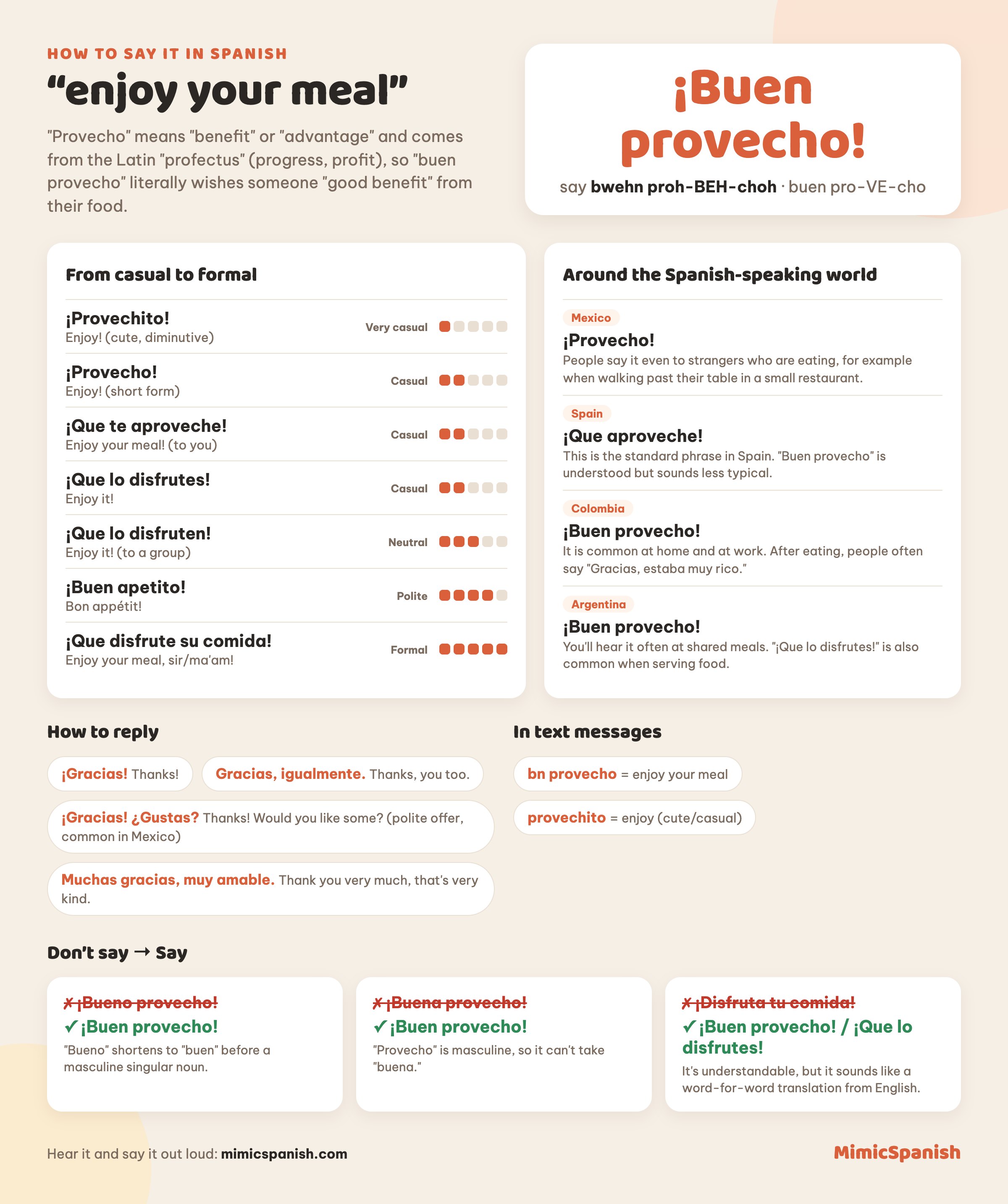
"¡Buen provecho!" is the most common way to say "enjoy your meal" in Spanish, especially in Latin America. You say it to someone who is about to eat or is already eating, and many people shorten it to just "¡Provecho!" In Spain, the more typical phrase is "¡Que aproveche!"
How to pronounce “¡Buen provecho!”
- Say "buen" as one quick syllable, "bwehn," not "boo-en."
- The "v" in "provecho" sounds like a soft "b," with the lips almost touching, never like an English "v."
- The "r" in "pro" is a single quick tap of the tongue, like the "dd" in American "ladder."
What it literally means
"Provecho" means "benefit" or "advantage" and comes from the Latin "profectus" (progress, profit), so "buen provecho" literally wishes someone "good benefit" from their food. It is related to the verb "aprovechar" (to make good use of), which gives Spain's "que aproveche."
Other ways to say it, from casual to formal
- ¡Provechito!Enjoy! (cute, diminutive) · casual, friendly, mostly MexicoVery casual
- ¡Provecho!Enjoy! (short form) · everyday meals, passing people who are eatingCasual
- ¡Que te aproveche!Enjoy your meal! (to you) · Spain, to one person you knowCasual
- ¡Que lo disfrutes!Enjoy it! · serving food to a friendCasual
- ¡Que aproveche!Enjoy your meal! · standard phrase in SpainNeutral
- ¡Que lo disfruten!Enjoy it! (to a group) · waiters serving a tableNeutral
- ¡Buen apetito!Bon appétit! · a bit more formal or internationalPolite
- ¡Que disfrute su comida!Enjoy your meal, sir/ma'am! · polite service, formal restaurantsFormal
By country
- ¡Provecho!Mexico · People say it even to strangers who are eating, for example when walking past their table in a small restaurant.
- ¡Que aproveche!Spain · This is the standard phrase in Spain. "Buen provecho" is understood but sounds less typical.
- ¡Buen provecho!Colombia · It is common at home and at work. After eating, people often say "Gracias, estaba muy rico."
- ¡Buen provecho!Argentina · You'll hear it often at shared meals. "¡Que lo disfrutes!" is also common when serving food.
In text messages
Example sentences
- Aquí está tu sopa. ¡Buen provecho!Here's your soup. Enjoy your meal!
- ¡Provecho, señores!Enjoy your meal, everyone!
- La comida está lista. ¡Buen provecho a todos!Lunch is ready. Enjoy your meal, everyone!
- Mamá, ¡qué rico huele! Buen provecho.Mom, it smells so good! Enjoy your meal.
- Cuando entré a la oficina, mis compañeros estaban comiendo y les dije "provecho".When I walked into the office, my coworkers were eating, so I said "enjoy your meal."
- El mesero nos sirvió los platos y dijo: "Que lo disfruten".The waiter served our plates and said, "Enjoy."
Mini dialogue: Lunch with a coworker
How to reply
- ¡Gracias!Thanks!
- Gracias, igualmente.Thanks, you too.
- ¡Gracias! ¿Gustas?Thanks! Would you like some? (polite offer, common in Mexico)
- Muchas gracias, muy amable.Thank you very much, that's very kind.
Grammar: Wishes with "que" + subjunctive
Phrases like "que aproveche" and "que lo disfrutes" are short for "I hope that..." Spanish uses "que" plus the subjunctive to wish things for people. Change the verb ending for who you're talking to: "disfrutes" (tú), "disfrute" (usted), "disfruten" (ustedes).
- ¡Que lo disfrutes!Enjoy it! (to a friend)
- ¡Que disfruten la comida!Enjoy the food! (to a group)
Common mistakes
Culture tip
In many Latin American countries, especially Mexico, it's polite to say "provecho" to anyone you see eating: coworkers, family, and even strangers when you walk past their table or leave a restaurant. People also say it when they get up from the table before others have finished. The usual reply is a simple "gracias," and in Mexico people often add "¿gustas?" to offer some of their food, though they don't expect you to accept.