How to say “good job” in Spanish
"Good job" in Spanish is "¡Buen trabajo!" (bwehn trah-BAH-hoh). It's the neutral way to praise someone's work anywhere in the Spanish-speaking world. In everyday speech people also say "¡Bien hecho!" (well done) or simply "¡Muy bien!" (very good).
How to pronounce “¡Buen trabajo!”
- Say "buen" as one quick syllable, "bwehn", not "boo-en".
- The "j" in "trabajo" is a breathy, throaty h sound, like a strong English "h" in "hot", never like the English "j".
- The "b" between vowels in "trabajo" is soft, with the lips barely touching, and the "r" is a quick tap like the "tt" in American "butter".
What it literally means
"Buen trabajo" literally means "good work": "buen" is the shortened form of "bueno" (good), used before a masculine noun, and "trabajo" means "work" or "job". "Trabajo" comes from the verb "trabajar" (to work), which traces back to Late Latin and originally meant "to toil" or "to suffer".
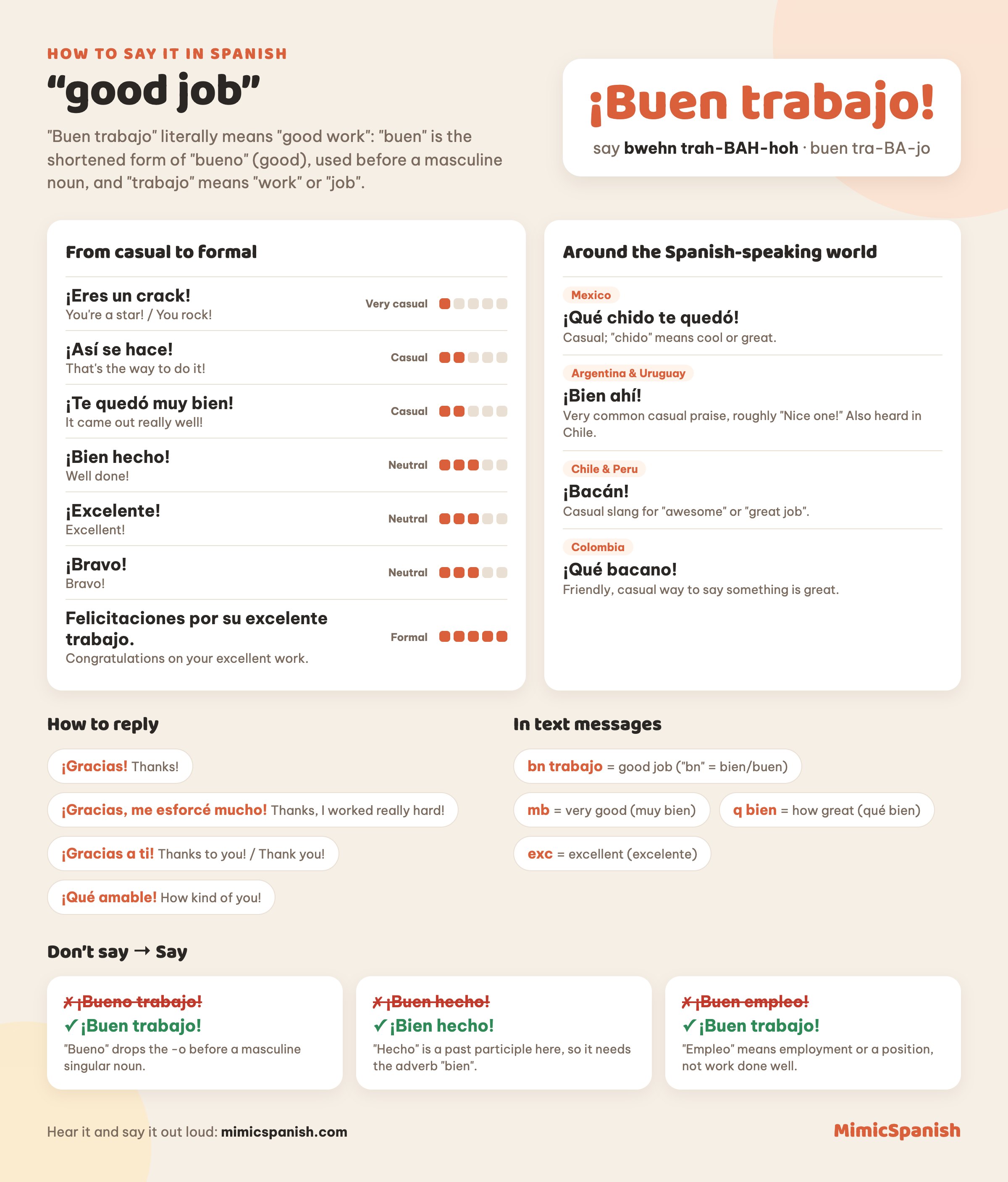
Other ways to say it, from casual to formal
- ¡Eres un crack!You're a star! / You rock! · among friends, very casualVery casual
- ¡Así se hace!That's the way to do it! · cheering someone on, sports, achievementsCasual
- ¡Te quedó muy bien!It came out really well! · praising something someone made (food, drawing, project)Casual
- ¡Bien hecho!Well done! · after someone completes a task or makes a good decisionNeutral
- ¡Muy bien!Very good! · quick praise, very common with kids and studentsNeutral
- ¡Excelente!Excellent! · when something is really impressiveNeutral
- ¡Bravo!Bravo! · applauding a performance or big successNeutral
- Felicitaciones por su excelente trabajo.Congratulations on your excellent work. · work emails, formal feedbackFormal
By country
- ¡Qué chido te quedó!Mexico · Casual; "chido" means cool or great.
- ¡Bien ahí!Argentina & Uruguay · Very common casual praise, roughly "Nice one!" Also heard in Chile.
- ¡Bacán!Chile & Peru · Casual slang for "awesome" or "great job".
- ¡Qué bacano!Colombia · Friendly, casual way to say something is great.
- ¡Eres un máquina!Spain · Casual; literally "you're a machine", meaning you're amazing at this.
In text messages
Example sentences
- ¡Buen trabajo, chicos! Terminamos temprano.Good job, guys! We finished early.
- ¡Bien hecho! Tu español está mejorando mucho.Well done! Your Spanish is improving a lot.
- La maestra le dijo: "¡Muy bien, Sofía!"The teacher told her: "Very good, Sofía!"
- ¡Qué rico! Te quedó muy bien la sopa.Delicious! The soup came out really well.
- Hiciste un buen trabajo con la presentación de ayer.You did a good job with yesterday's presentation.
- Quiero felicitarlos por el excelente trabajo que hicieron este mes.I want to congratulate you all on the excellent work you did this month.
Mini dialogue: After a presentation at work
How to reply
- ¡Gracias!Thanks!
- ¡Gracias, me esforcé mucho!Thanks, I worked really hard!
- ¡Gracias a ti!Thanks to you! / Thank you!
- ¡Qué amable!How kind of you!
Grammar: Buen vs. bien
"Buen" is an adjective (the short form of "bueno" before a masculine singular noun), so it describes a thing: "buen trabajo". "Bien" is an adverb, so it describes how something was done: "bien hecho". Before a feminine noun, use "buena": "buena idea".
- Es un buen trabajo.It's a good job / good work.
- Lo hiciste muy bien.You did it very well.
Common mistakes
Culture tip
Spanish speakers praise generously and often, especially with children, students and coworkers, and "¡Muy bien!" or "¡Bien hecho!" come up constantly in daily life. Praise is often paired with a thumbs-up, a pat on the back or a high five ("¡Choca esos cinco!"). In work settings, a written "Excelente trabajo" or "Felicitaciones" in an email is a common, appreciated gesture.