How to say “sorry” in Spanish
The most common way to say "sorry" in Spanish is "lo siento" (loh SYEHN-toh), used when you genuinely regret something or feel bad for someone. For small everyday slips, like bumping into someone or interrupting, Spanish speakers usually say "perdón" or "disculpa" ("disculpe" with strangers or in formal situations).
How to pronounce “Lo siento”
- The "ie" in siento is one quick glide, like the "ye" in "yes," not two separate vowels.
- Say the Spanish "t" with your tongue touching the back of your top teeth and no puff of air.
- Keep each "o" short and pure, without sliding into an English "oh-w" sound.
What it literally means
"Lo siento" literally means "I feel it," from the verb sentir (to feel), which comes from Latin sentire. Saying it means you feel the bad thing that happened, while "perdón" literally asks for pardon.
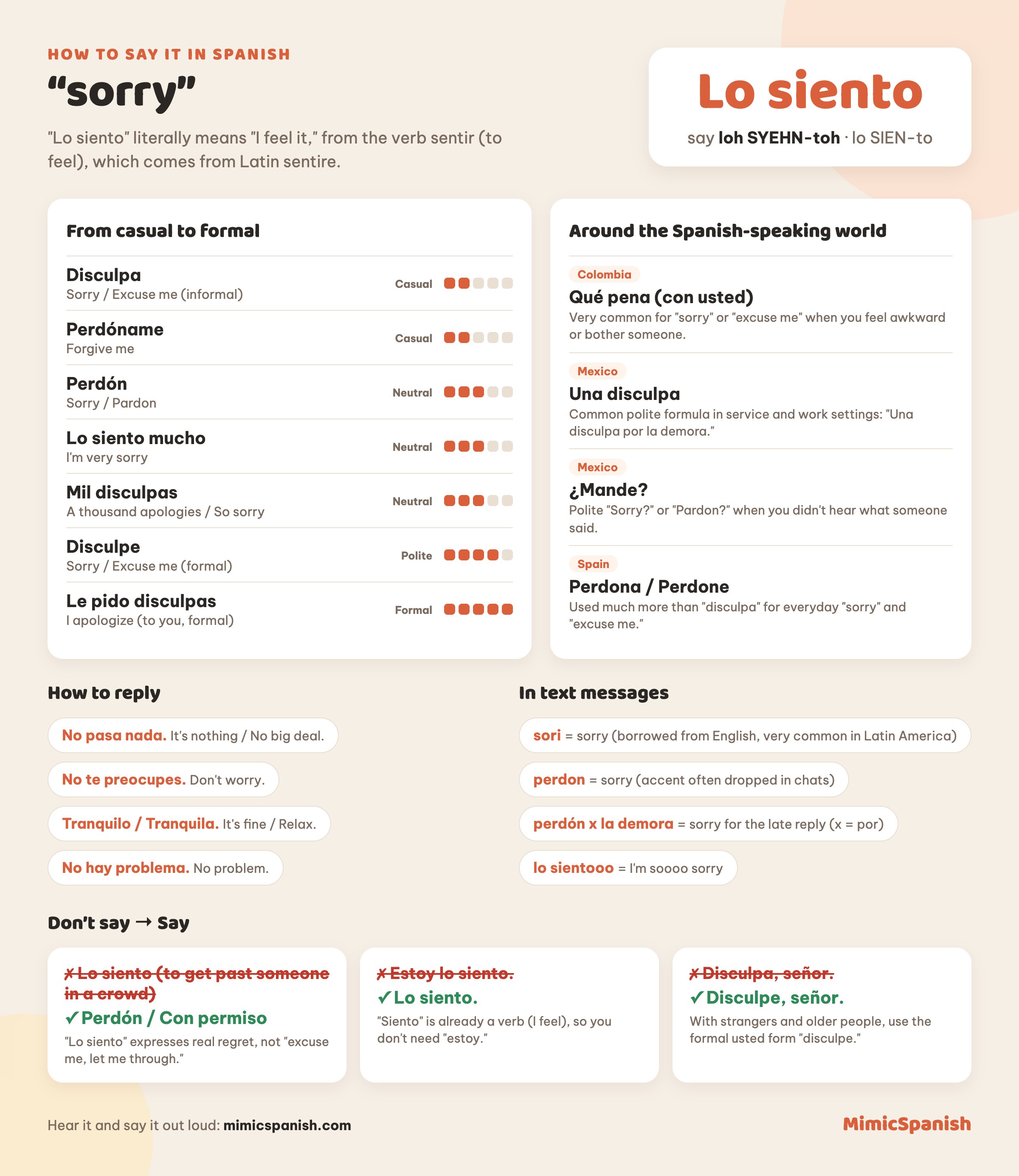
Other ways to say it, from casual to formal
- DisculpaSorry / Excuse me (informal) · small apologies to friends or people your ageCasual
- PerdónameForgive me · a sincere personal apology to someone closeCasual
- PerdónSorry / Pardon · small accidents, interrupting, or not hearing someoneNeutral
- Lo siento muchoI'm very sorry · a real mistake or sympathy for bad newsNeutral
- Mil disculpasA thousand apologies / So sorry · emphatic apology for an inconvenienceNeutral
- DisculpeSorry / Excuse me (formal) · with strangers, older people, or staffPolite
- Le pido disculpasI apologize (to you, formal) · work emails, customer service, formal settingsFormal
By country
- Qué pena (con usted)Colombia · Very common for "sorry" or "excuse me" when you feel awkward or bother someone.
- Una disculpaMexico · Common polite formula in service and work settings: "Una disculpa por la demora."
- ¿Mande?Mexico · Polite "Sorry?" or "Pardon?" when you didn't hear what someone said.
- Perdona / PerdoneSpain · Used much more than "disculpa" for everyday "sorry" and "excuse me."
- Perdoná / DisculpáArgentina & Uruguay · Vos forms with the stress on the last syllable.
In text messages
Example sentences
- Lo siento, no hablo mucho español.Sorry, I don't speak much Spanish.
- ¡Perdón! No te vi.Sorry! I didn't see you.
- Disculpe, ¿dónde está la estación?Excuse me, where is the station?
- Siento llegar tarde, había mucho tráfico.Sorry I'm late, there was a lot of traffic.
- Lo siento mucho, espero que te mejores pronto.I'm so sorry, I hope you feel better soon.
- Perdón por no contestar ayer, estaba muy ocupado.Sorry for not answering yesterday, I was really busy.
Mini dialogue: Late for coffee with a friend
How to reply
- No pasa nada.It's nothing / No big deal.
- No te preocupes.Don't worry.
- Tranquilo / Tranquila.It's fine / Relax.
- No hay problema.No problem.
Grammar: "Lo siento" vs. "Siento + what you're sorry for"
"Lo siento" stands alone, because "lo" (it) already refers to the situation. To say what you're sorry about, drop "lo" and put the reason right after "siento": an infinitive if it's your own action, or "que" + subjunctive if it's about someone else. You can also use "perdón por" + infinitive or noun.
- Siento molestarte.Sorry to bother you.
- Siento que estés enfermo.I'm sorry you're sick.
Common mistakes
Culture tip
Native speakers say "perdón" or "disculpa" far more often than "lo siento," which is saved for real regret or sympathy, such as when someone shares bad news. When passing through a crowd or leaving a table, people say "con permiso," and a quick "perdón" with a small raised hand is common after a minor bump. Using "disculpe" with older people, shop staff, or officials sounds respectful and is always a safe choice.