How to say “please” in Spanish
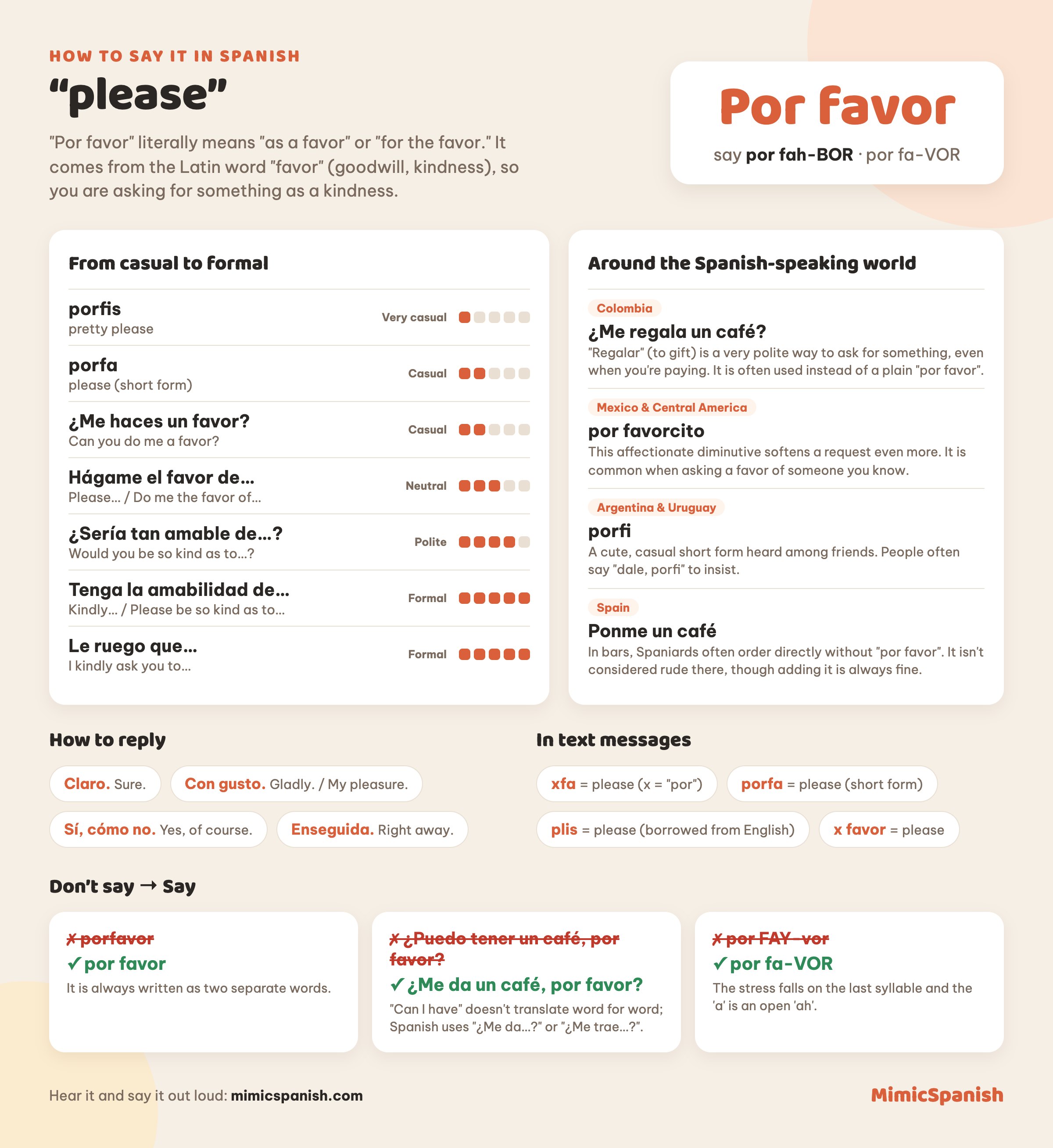
"Please" in Spanish is "por favor" (por fah-BOR). It works in every Spanish-speaking country and in both formal and informal situations. It can go at the start or end of a request: "Un café, por favor."
How to pronounce “Por favor”
- The Spanish 'v' in 'favor' sounds like a soft 'b', with the lips lightly touching, never like an English 'v'.
- The final 'r' is a quick single tap of the tongue, like the 'tt' in American 'butter', not the English 'r'.
- The 'a' is always an open 'ah', so say 'fah-BOR', not 'FAY-vor'.
What it literally means
"Por favor" literally means "as a favor" or "for the favor." It comes from the Latin word "favor" (goodwill, kindness), so you are asking for something as a kindness.
Other ways to say it, from casual to formal
- porfispretty please · playful or begging tone, often with kids or close friendsVery casual
- porfaplease (short form) · with friends, family and coworkers you know wellCasual
- ¿Me haces un favor?Can you do me a favor? · asking a friend for helpCasual
- Hágame el favor de…Please… / Do me the favor of… · polite request to a stranger; can sound firm depending on toneNeutral
- ¿Sería tan amable de…?Would you be so kind as to…? · very polite request to a stranger or customerPolite
- Tenga la amabilidad de…Kindly… / Please be so kind as to… · formal instructions, notices, customer serviceFormal
- Le ruego que…I kindly ask you to… · formal emails and lettersFormal
By country
- ¿Me regala un café?Colombia · "Regalar" (to gift) is a very polite way to ask for something, even when you're paying. It is often used instead of a plain "por favor".
- por favorcitoMexico & Central America · This affectionate diminutive softens a request even more. It is common when asking a favor of someone you know.
- porfiArgentina & Uruguay · A cute, casual short form heard among friends. People often say "dale, porfi" to insist.
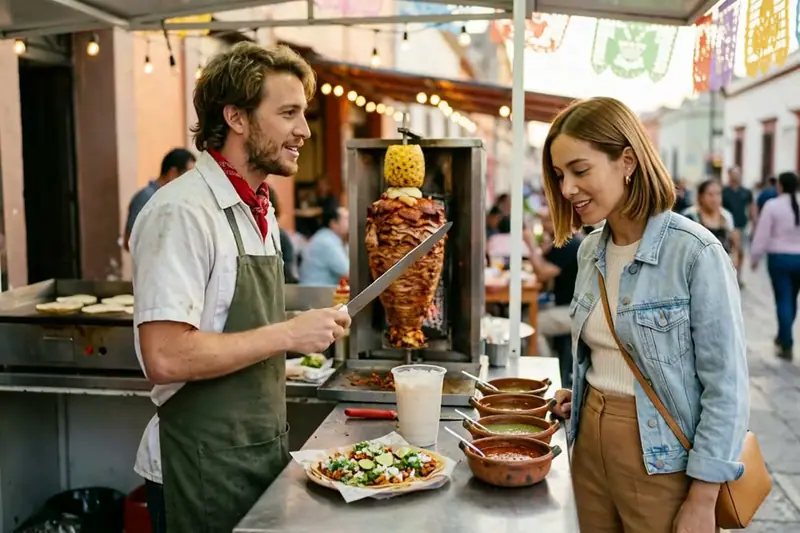
- Ponme un caféSpain · In bars, Spaniards often order directly without "por favor". It isn't considered rude there, though adding it is always fine.
In text messages
Example sentences
- Un café con leche, por favor.A coffee with milk, please.
- ¿Me pasas la sal, por favor?Can you pass me the salt, please?
- Más despacio, por favor.Slower, please.
- Por favor, cierra la puerta.Please close the door.
- ¿Podría repetirlo, por favor?Could you repeat that, please?
- Por favor, no olvide traer su pasaporte mañana.Please don't forget to bring your passport tomorrow.
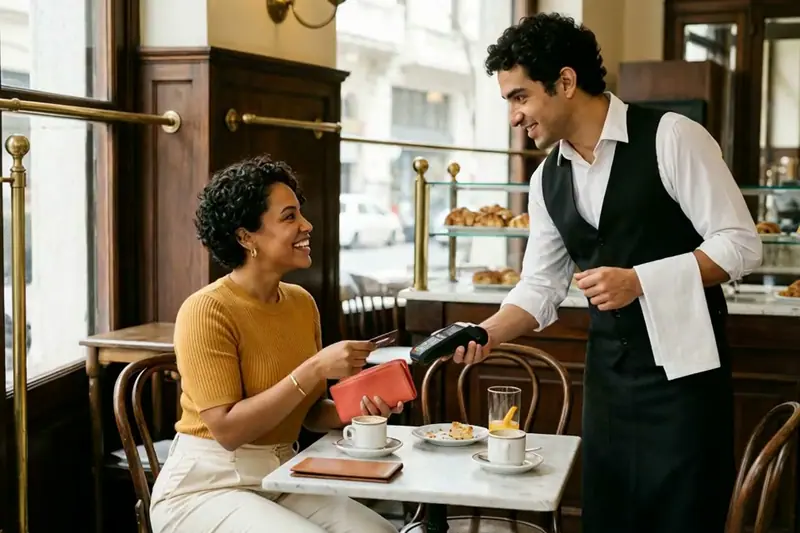
Mini dialogue: At a café
How to reply
- Claro.Sure.
- Con gusto.Gladly. / My pleasure.
- Sí, cómo no.Yes, of course.
- Enseguida.Right away.
Grammar: Softening requests with "por favor"
"Por favor" can go at the beginning or the end of a request, separated by a comma. To sound even more polite, Spanish speakers often turn the request into a question. They use the present tense (¿Me das…?) with friends or the conditional (¿Podría…?) with strangers, instead of a bare command.
- ¿Me das tu número, por favor?Can you give me your number, please?
- ¿Podría ayudarme, por favor?Could you help me, please?
Common mistakes
Culture tip
In Latin America, requests are usually softened with "por favor", a friendly tone and often diminutives or polite questions. Leaving it out can sound bossy. In Spain people are more direct, especially in bars and shops, and skipping "por favor" is not seen as rude. When someone offers you something, "Sí, por favor" or "Sí, gracias" are both natural answers.